Unlocking Potential: How Music Can Help Kids with Dyslexia Thrive
By Tess Garrett
February 20, 2025
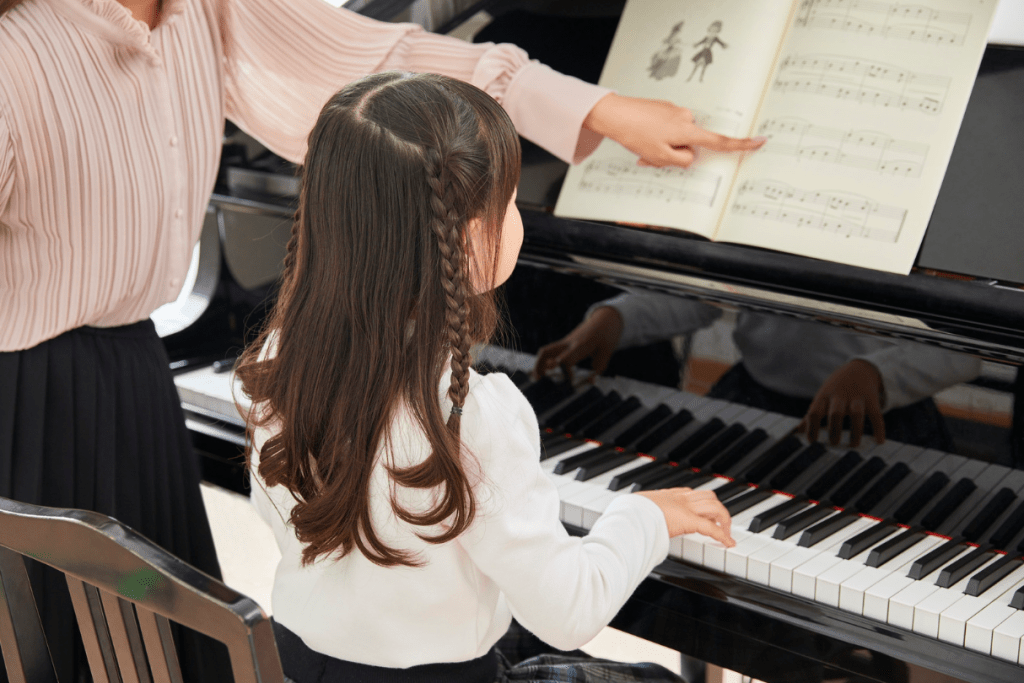
Dyslexia, a common learning difference, can make things like reading and writing tough, but did you know music may actually make a difference? Research shows that music lessons aren’t just fun, they can also help people with dyslexia develop skills that make life and learning easier. Let’s talk about why music works, the challenges it can help with, and how teachers and parents can use music to support students with dyslexia.
Why Music Is a Game-Changer for Dyslexia
Music training does some amazing things for people with dyslexia. Research suggests that music interventions designed to strengthen basic auditory music perception skills can have a positive impact on children with dyslexia, potentially helping to address some of their language challenges. By improving the ability to distinguish between different sounds, pitches, and rhythms, music training enhances the brain’s auditory processing, a skill that can be weaker in individuals with dyslexia. Strengthening these auditory skills not only boosts musical abilities but can also translate into improvements in language processing, such as phonological awareness and reading skills. This dual benefit makes music an exciting and effective tool in supporting both musical and language development in children with dyslexia.
What makes music even more special is how it engages multiple senses. Playing music combines listening, seeing, and moving to create a full-body experience! This multisensory approach is super effective for dyslexic learners because it taps into different ways of learning. Plus, music can boost confidence. When kids succeed in music, it helps them feel good about themselves, which is so important if they’re feeling frustrated in other areas.

Facing the Challenges in Music
Despite the amazing benefits, learning music can pose different challenges for students with dyslexia. Reading sheet music, for example, can feel just as hard as reading text. Decoding musical notes takes time, and it’s easy to make mistakes. But here’s the good news: a lot of people with dyslexia are great at learning by ear. They might find it easier to play a song after hearing it rather than reading it on paper. Rhythm tasks, like clapping patterns, can also help improve their timing and coordination, which supports both music and reading skills.
How we Approach Teaching Students with Dyslexia
To address these challenges, music teachers have lots of ways to make learning easier and more fun for students with dyslexia. Using colour-coded notes or simplified sheet music can make reading music less overwhelming. Rhythm games like clapping or tapping can build foundational skills in a low-pressure way. Teaching by ear is another great option when students struggle with reading sheet music, as research suggests that students with dyslexia are very strong with auditory tasks. Our goal is to try multiple strategies to find what makes our students feel successful at every stage.
How Parents Can Help at Home
Parents play a crucial role in encouraging their children with dyslexia by providing consistent support and understanding. Recognizing that their child’s brain processes information differently helps parents approach learning with patience and empathy. Instead of seeing challenges as obstacles, parents can focus on their child’s strengths, fostering an environment where mistakes are viewed as opportunities for growth. Encouragement and positive reinforcement are key. When parents celebrate small victories, they build their child’s confidence and motivation. By understanding that their child’s learning journey may look different, parents can create a supportive, low-pressure space for their child to thrive. Your encouragement makes all the difference!

Famous Musicians with Dyslexia
Many musicians with dyslexia have turned their challenges into strengths, demonstrating that their learning difference doesn’t hinder musical ability. In fact, their unique ways of processing sound and learning may contribute to exceptional musical talents. Some well-known musicians, such as Cher, Sir Paul McCartney of the Beatles, Mick Fleetwood of Fleetwood Mac and many others have spoken about their experience with dyslexia and how music became an essential part of their lives. For these individuals, learning to play instruments often involves alternative approaches, like learning by ear or focusing on rhythm-based tasks. Music allows them to tap into a different set of cognitive processes, offering a creative outlet and reinforcing skills like auditory processing, memory, and focus. The success of these musicians highlights the potential for those with dyslexia to thrive in music, demonstrating that their ability to play an instrument is not just possible but can be enhanced through personalized learning methods.
The Big Picture
Music has the power to open up new possibilities for people with dyslexia. It’s not just about learning to play an instrument; it’s about building confidence, improving essential skills, and having a creative outlet. Whether it’s through clapping games, colour-coded sheet music, or learning songs by ear, music can help learners with dyslexia thrive.
Sources (Click to view):
- https://www.frontiersin.org/journals/psychology/articles/10.3389/fpsyg.2016.00026/full
- https://files.eric.ed.gov/fulltext/ED577839.pdf
- https://www.uwo.ca/fhs/lwm/teaching/EBP/2019_20/Hoekstra.pdf
- https://www.understood.org/en/articles/celebrity-spotlight-superstar-cher-triumphs-with-dyslexia-and-dyscalculia
- https://www.understood.org/en/articles/mick-fleetwood-credits-dyslexia-for-drumming-style
 Meliora Music